🐋 The Epic Saga of “Timmy the Whale”: From a Disoriented Humpback to a 55-Million-Baht Controversy and His Final Chapter in Denmark 🇩🇰
It is the official, heartbreaking end of the story of “Timmy”, a young humpback whale who had wandered into the Baltic Sea. But before his carcass was discovered in Denmark, Timmy’s journey was filled with epic conflicts and an astonishing financial investment that will be remembered. Here is the complete, detailed timeline of his story from beginning to end.
⏳ Timeline of the Stranding: Almost 2 Months Trapped in Shallow Waters!
Timmy did not suddenly strand and die; he endured a long, harrowing ordeal in shallow waters:
* 3 March 2026: Timmy was first sighted in the port of Wismar in Germany. He had become disoriented and caught in fishing nets, but the authorities were able to rescue him.
* 23 March 2026: Timmy stranded again on a sandbank near Timmendorfer Strand (this is where the name “Timmy” comes from!). The authorities had to use excavators to dig a trench through which he could swim back to the sea.
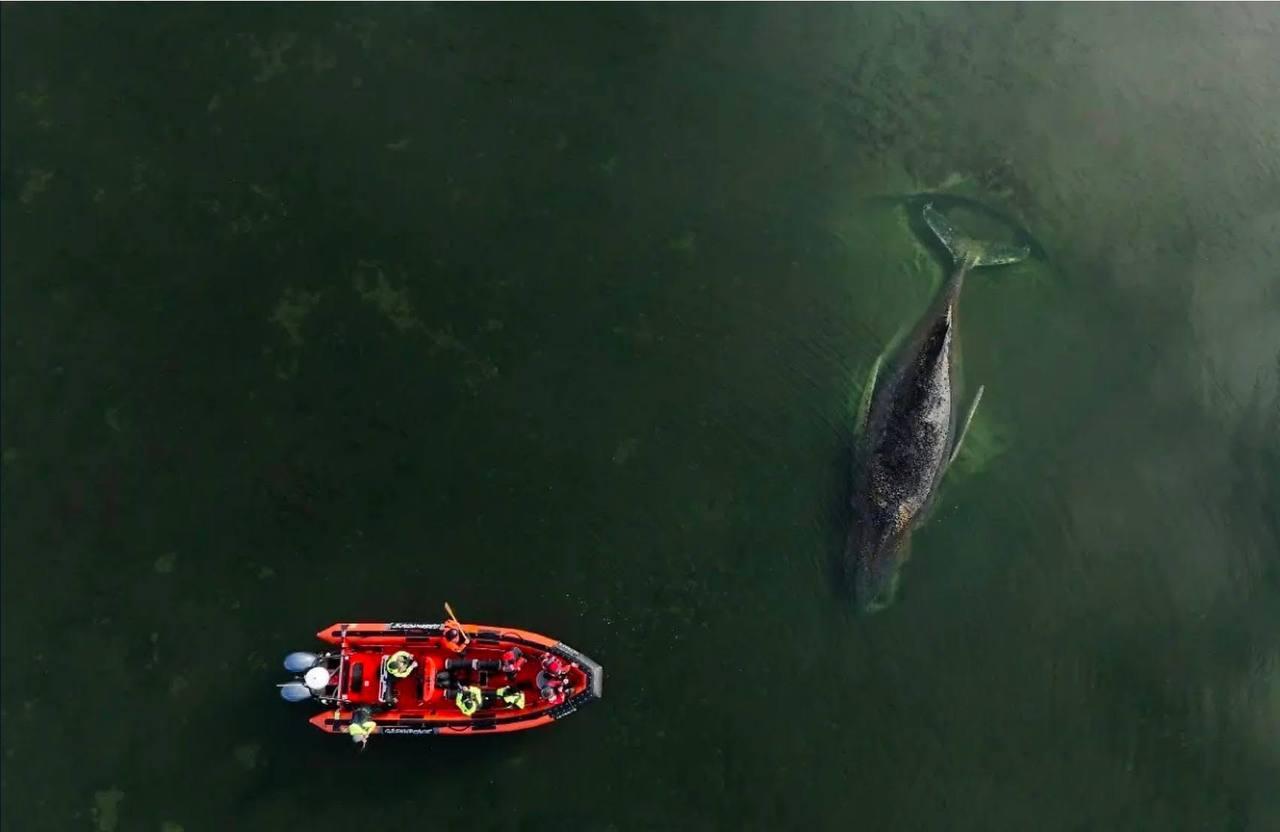
* April 2026: Timmy stranded yet again near the island of Poel. In total, Timmy spent about two-thirds of a 60-day period in shallow waters. The low salt content of the water caused blisters and severe wounds on his skin.
📣 The Escalation: “Timmy Mania” Grips the World
From the moment Timmy was stuck near the island of Poel, the story exploded into a national and global phenomenon that the German media called “Timmy Mania”.
* Major German outlets like NDR, ZDF, Bild, and Welt provided 24-hour on-site coverage.
* Livestreams ran for hours without interruption and viewer numbers reached hundreds of thousands.
* Even the slightest twitch of Timmy’s tail sparked a massive wave of cheering in the comment sections.
* People drove in from distant cities just to catch a glimpse of him.
This enthusiasm quickly spread beyond Germany. International media such as the BBC, The Guardian, Le Monde, DR (Denmark), and SVT (Sweden) reported continuously on his situation. On Instagram and TikTok, hashtags like #TimmyTheWhale and #WalTimmy collected tens of millions of views.
But this massive spotlight created immense pressure that made rescue efforts more difficult:
* The noise from crowds, drones, and circling boats significantly increased Timmy’s stress levels.
* Authorities had to constantly control the crowds, which delayed rescue operations.
* Experts warned that “surrounding a sick animal like this only prolongs its suffering”.
Timmy was not only struggling with physical weakness and shallow waters; he carried the weight of the whole world watching him.
💥 The Bitter Debate: “Life-Saving Rescue” vs. “Animal Cruelty”
When Timmy was stuck near the island of Poel, too weak to swim into deeper water, public opinion split into a heated national controversy:
* The scientists and NGOs (e.g. Greenpeace): They firmly refused to move him. Experts warned that Timmy was too weak and that using heavy equipment to lift or pull a multi-ton whale would cause immense stress and internal trauma, potentially leading him to drown during transport. Some academics even suggested that peacefully euthanising him would be the most humane option to end his suffering.
* The politicians and rescue teams: Led by Environment Minister Till Backhaus, this side believed that humans had a duty to intervene because every life deserves a chance. He approved a private relocation operation. The plan involved converting a cargo barge into a giant water sling to support Timmy and tow him toward the North Sea.
However, the approval process was plagued by extensive bureaucratic delays.
💰 Funding the Mission: The Billionaire Who Spent 55 Million Baht!
A global-scale rescue mission of this magnitude – requiring tugs, veterinary teams, divers, and heavy equipment – naturally cost a fortune, and it was not funded by taxpayers.