A fragrance like a little Thailand vacation
There are dishes where the very first spoonful gives you a touch of wanderlust – and Thai green curry is exactly that kind of food. The famous green curry, known in Thailand as Gaeng Keow Wan, combines creamy coconut milk, fresh herbs, and pleasant heat into a wonderfully well-rounded comfort dish that still tastes exciting.
Ingredients for 2–4 servings
- 400 g chicken breast or boneless chicken thighs, cut into bite-sized pieces
- 2–3 tbsp green curry paste
- 400 ml coconut milk
- 100 ml water or mild stock
- 1 tbsp neutral oil
- 1 small onion or 2 shallots, finely sliced
- 2 cloves of garlic, finely chopped
- 1 small piece of ginger or galangal, finely sliced
- 1 small red bell pepper, cut into thin strips
- 150 g zucchini or Thai eggplants, cut into pieces
- 1 handful green beans, cut into short pieces
- 1–2 kaffir lime leaves, torn into small pieces or very finely sliced (optional)
- 1–2 tsp fish sauce
- 1 tsp soy sauce
- 1 tsp palm sugar or brown sugar
- 1 small handful Thai basil or regular basil
- 1 fresh green or red chili, cut into thin rings (optional)
- Juice of 1/2 lime
- Jasmine rice for serving
Preparation: How to make an aromatic Thai green curry
Before you turn on the stove, a little prep is worth it. It’s best to cut meat, vegetables, and herbs completely in advance, because the curry cooks quite quickly later. Especially for beginners this is worth gold: when everything is within easy reach, you can fully focus on the flavors and don’t have to frantically chop beans on the side.
First cook the jasmine rice according to the package instructions. While the rice is cooking, you prepare the curry. Ideally, both should be ready at the same time so you can serve the green curry nice and hot.
Now heat a wok or deep pan over medium heat. Add the oil and then the onion or shallots. Let them sweat for 2 to 3 minutes until they are soft and slightly translucent. That’s exactly what “translucent” means: the onions no longer seem raw and harsh, but slightly see-through and mildly sweet in aroma. They should not turn dark, otherwise they quickly taste bitter.
Now add the garlic and ginger or galangal. Stir everything for about 30 seconds until it becomes intensely fragrant. Then add the green curry paste to the pan. This step is crucial for a really good Thai green curry: the paste should be briefly fried in the hot fat so that its aromas can develop. Stir it for 1 to 2 minutes until it smells strong and combines with the onions. If it gets too dry on the bottom, just add a small splash of coconut milk.
Next, pour in about half of the coconut milk. Let the mixture simmer gently and stir regularly. After a short time, the sauce will become creamy and slightly glossy. That’s when you know the curry paste and coconut milk have combined well. In many Thai kitchens, this is the moment when the base of the curry really comes to life.
Now add the chicken pieces and mix them thoroughly with the sauce. Let the meat cook gently for 3 to 4 minutes so it can absorb the spices. Then add the remaining coconut milk and the water or stock. Stir everything well once and reduce to medium to low heat. The curry should not boil vigorously, but rather simmer gently. This way the chicken stays tender and the coconut milk nice and creamy.
Now add bell pepper, zucchini or Thai eggplants, green beans and – if you have them – the kaffir lime leaves. Let the curry simmer for another 6 to 8 minutes. The vegetables should become soft but still retain a bit of bite. If you run a spoon through the sauce and it lightly coats the back of the spoon, it has a good consistency. If it’s too thick for you, add a small splash of water. If it’s too thin, just let it simmer for another 2 to 3 minutes without a lid.
Now it’s time to season: add fish sauce, soy sauce, and sugar. Stir well and then taste mindfully. A successful Thai green curry lives from balance – salty, slightly sweet, creamy, and pleasantly spicy. If you are missing freshness, this is where the lime juice comes in. If it needs more seasoning, half a teaspoon of fish sauce helps. If it has become too spicy, you can balance it out with a bit more coconut milk.
Right at the end, fold in the basil and, if you like, some fresh chili. The basil should only sit in the hot curry briefly and not be cooked for long so it keeps its typical slightly peppery aroma. As soon as the leaves wilt and smell wonderfully aromatic, the curry is ready to serve.
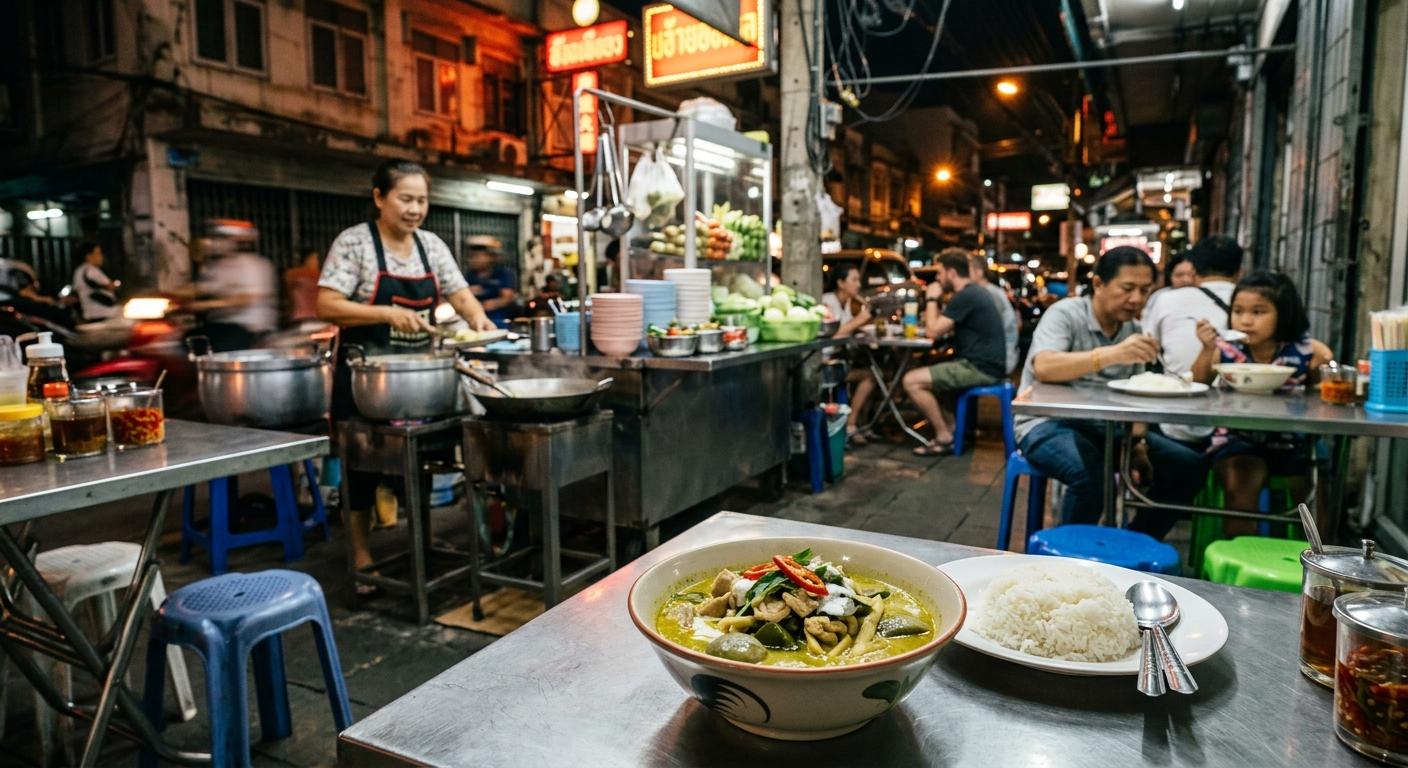
Arrange the hot jasmine rice in bowls or on plates and spoon the creamy green curry over or next to it. It looks especially nice if you add a few basil leaves and some thin chili rings on top. That way the dish instantly feels like it’s from a little street food stall in Bangkok – only this time from your very own kitchen.
Tips for an especially good green curry
If you are cooking Thai green curry for the first time, start with 2 tablespoons of curry paste and slowly adjust to your preferred level of heat. Each brand has a different intensity. Chicken thighs usually stay juicier than breast meat, while zucchini and bell pepper are especially easy to find if you can’t get authentic Thai eggplants. And one more little kitchen hack: with a high-quality coconut milk, the curry becomes noticeably rounder, creamier, and more aromatic.
This recipe for Thai green curry with chicken is ideal if you want to cook Thai food without overwhelming yourself. It tastes like a lot of effort, but in reality it’s a wonderfully approachable weeknight dish – fragrant, creamy, and full of character.
Sources used: Authentic & Easy Thai Green Curry Chicken – Hot Thai Kitchen | Authentic Thai Green Curry Recipe – Eating Thai Food | Green Curry Paste Recipe – Hot Thai Kitchen