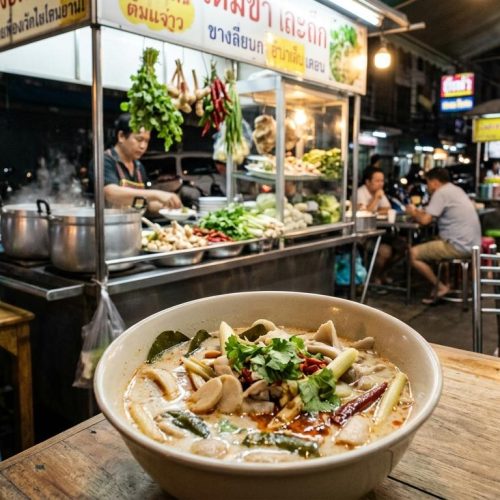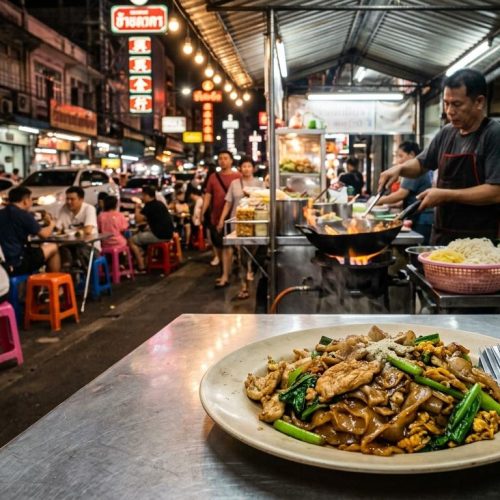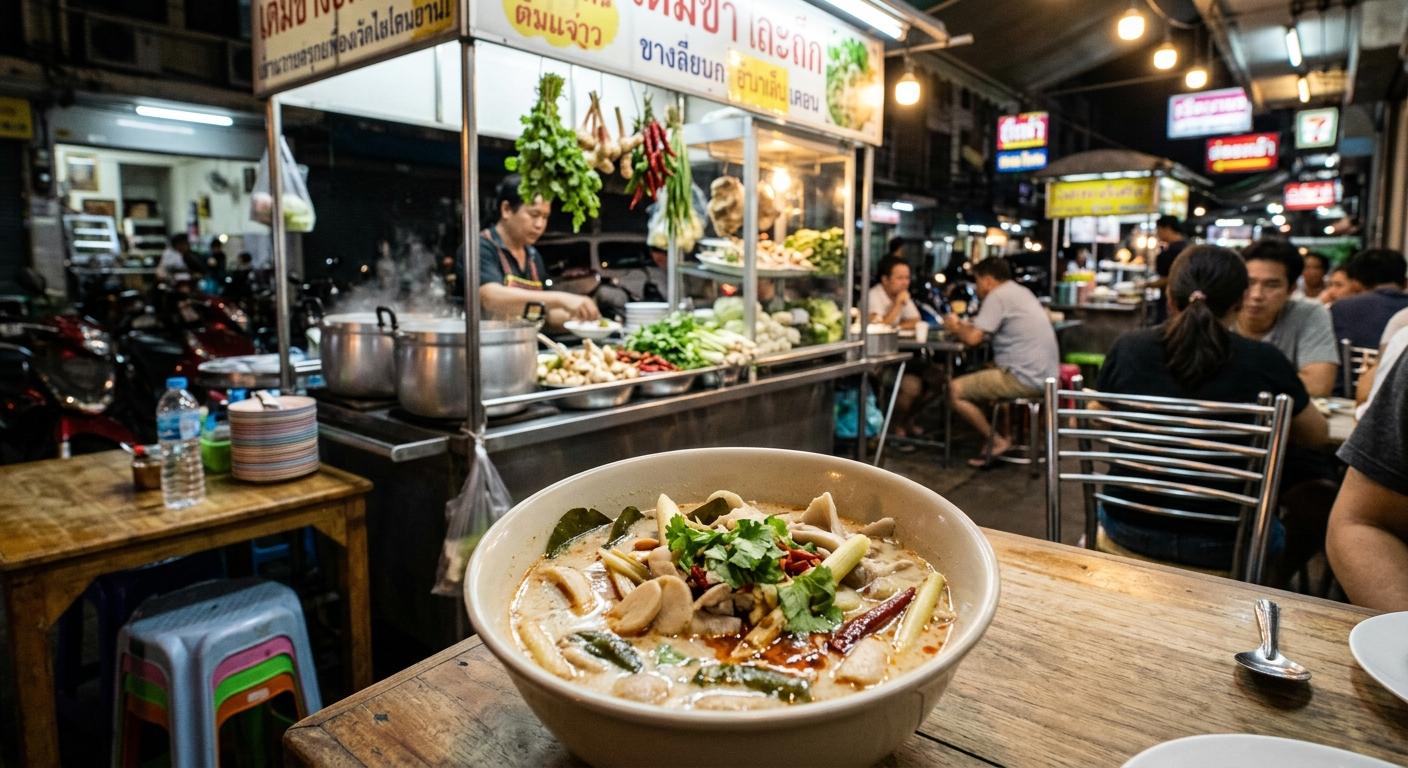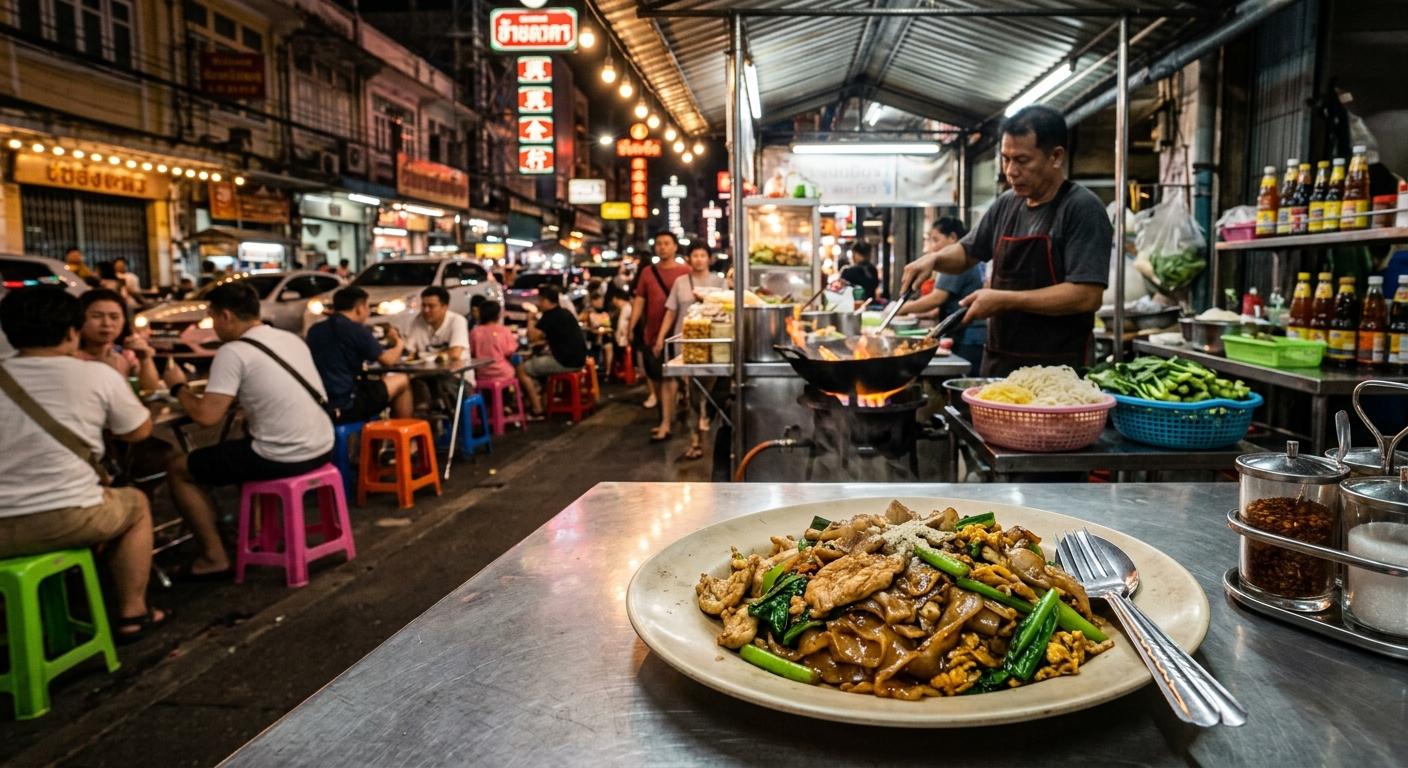
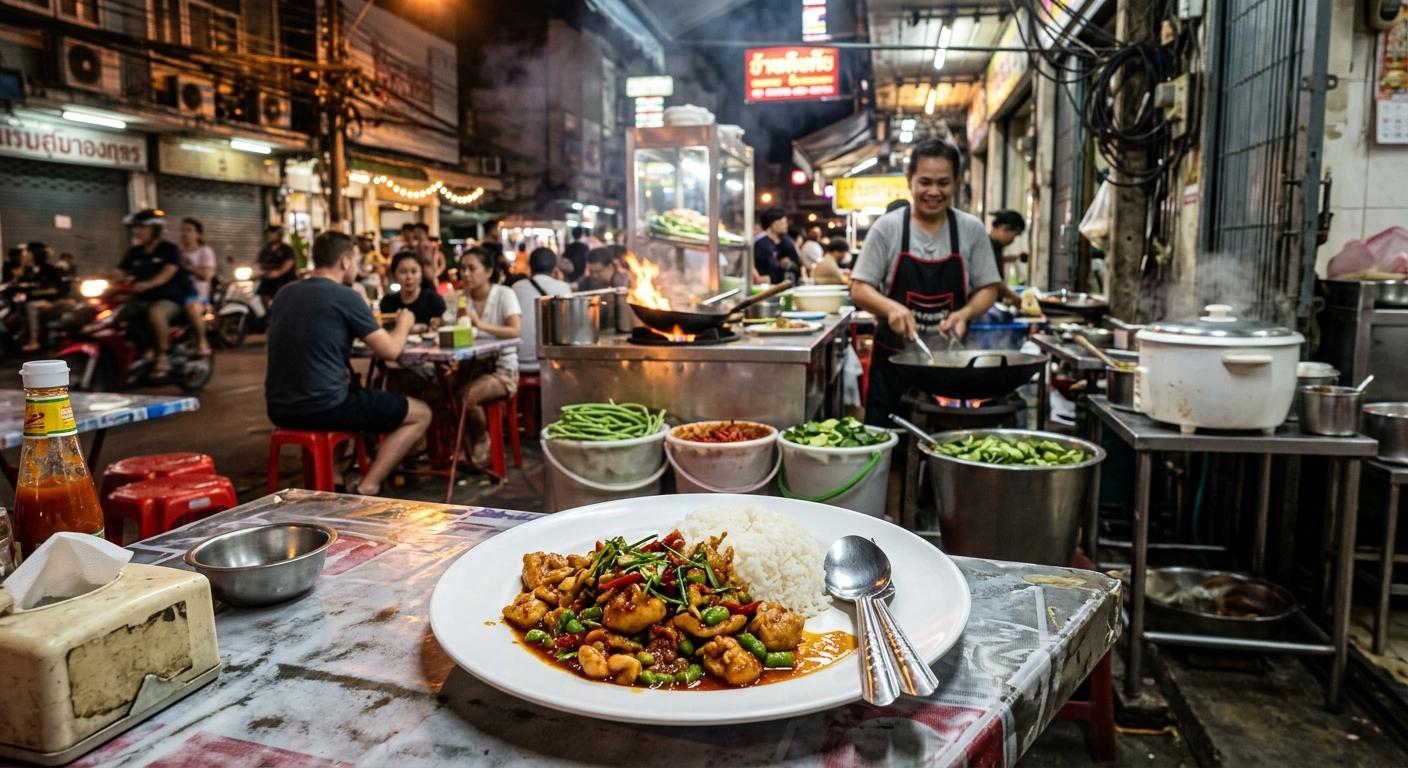
A good Thai dish manages to bring an incredible amount of aroma to the plate with just a few ingredients – and that’s exactly what makes Pad Prik King so special. This classic Thai wok dish is a kind of “dry curry”: intense, fragrant, mildly spicy and perfect for anyone who wants real Thailand vibes in their own kitchen.
What is Pad Prik King?
Pad Prik King is a popular Thai wok dish with red curry paste, meat and crisp vegetables – usually long beans. Unlike a creamy curry, nothing is swimming in sauce here: the seasoning paste only lightly coats the chicken, resulting in an aromatic, slightly glossy stir-fry. That’s what makes this recipe so exciting: lots of flavor, yet quick, everyday-friendly and wonderfully uncomplicated.
Ingredients for 2–4 servings
- 400 g chicken, preferably boneless chicken thighs or chicken breast
- 200 g green beans or long beans
- 2–3 makrut lime leaves, finely sliced into strips
- 2 tbsp red Thai curry paste
- 1–2 tbsp neutral oil
- 1 tbsp fish sauce
- 1–2 tsp palm sugar or brown sugar
- 3–4 tbsp water or mild chicken stock
- 1 small red chili, finely sliced into rings, optional
- freshly cooked jasmine rice for serving
Preparation: How Pad Prik King turns out well even for beginners
First, prepare all the ingredients, because when cooking with a wok everything happens quite quickly later on. Cut the chicken into bite-sized pieces – not too small, so it stays juicy when frying. If you use chicken breast, it’s best to slice it slightly diagonally against the grain; this helps keep the meat more tender. Trim the beans and cut them into pieces about 4 to 5 centimeters long. It’s best to roll up the makrut lime leaves tightly and then slice them into very fine strips. This way they release their aroma particularly well and are pleasant to eat later.
Next, bring a pot of water to a boil and blanch the beans for about 2 minutes. This step isn’t essential, but it’s especially helpful for beginners: the beans will cook more evenly and retain their beautiful green color. Then drain immediately and briefly rinse with cold water. This stops the cooking process and keeps them crisp instead of gray and soft.
Now it’s time for the wok or a large pan. Heat the oil over medium to slightly higher heat. Important: the pan should be hot, but not smoking. Add the red curry paste and fry it for about 30 to 60 seconds. This is where the base for the typical flavor develops. The paste should start to smell intense, but not turn dark. If it seems too dry or sticks to the bottom of the pan, simply add a small splash of water. This is a great trick to prevent burning while still allowing the aromas to develop nicely.
As soon as the curry paste is fragrant, add the chicken. Stir well so that every piece is coated with the paste. In the first few minutes, the mixture often looks a bit stiff or dry – that’s completely normal for Pad Prik King. Now gradually add the water or stock, not all at once. This way, you don’t end up with a runny sauce like a curry, but rather a glossy seasoning that clings to the meat. Stir-fry the chicken, stirring constantly, until it is almost cooked through.
Now add the fish sauce and sugar. This combination is typically Thai: salty, slightly sweet and full of depth. It’s best to approach the seasoning gradually. Curry pastes vary in intensity and saltiness from brand to brand. That’s why it’s smart to start with a little less fish sauce and add more later if needed. If you feel that the flavor is very spicy but still a bit harsh, often just a small extra pinch of sugar helps. The balance makes all the difference here.
Next, add the blanched beans to the pan and mix everything thoroughly. The beans should get hot, but keep their bite. Finally, add the finely sliced makrut lime leaves. They’re not just an extra, but one of the key flavor components in this Thai recipe. They give the dish that fresh, citrusy aroma that immediately evokes Thai street food stalls. If you like, you can now also add some fresh chili rings.
How do you know when the consistency is right? Pad Prik King should not be soupy. In the end, there should be a thin, glossy coating of seasoning on the meat and beans, and at most a small amount of liquid collecting in the pan. If there’s too much sauce, simply let the dish cook uncovered for another 30 to 60 seconds. If it looks too dry, a tablespoon of water will help. This is really a recipe where you quickly get a feel for it with just a few small adjustments.
Serve the Pad Prik King immediately with freshly cooked jasmine rice. The rice soaks up the intense seasoning beautifully and rounds out the dish. It’s especially tasty if you add a few extra strips of lime leaf or some fresh chili at the table.
Tips for an especially aromatic result
If you like it particularly juicy, use chicken thighs instead of breast whenever possible. Also make sure to briefly fry the curry paste – this small step ensures that the dish doesn’t just taste spicy, but deep and well-rounded. And very important: don’t overload the pan. If you double the quantity, it’s better to fry in two batches so the chicken sears instead of steams.
Why this Thai recipe is perfect for everyday cooking
Pad Prik King is ideal if you’re looking for a quick Thai recipe that tastes authentic yet doesn’t require complicated techniques. The dish is on the table in about 30 minutes, doesn’t need a long list of ingredients and still delivers exactly the flavors people love about Thai cuisine: seasoning, freshness, a gentle heat and loads of character.
Sources: Pad Prik King recipe – Hot Thai Kitchen | Thai Gai Pad Prik Gaeng – Eating Thai Food