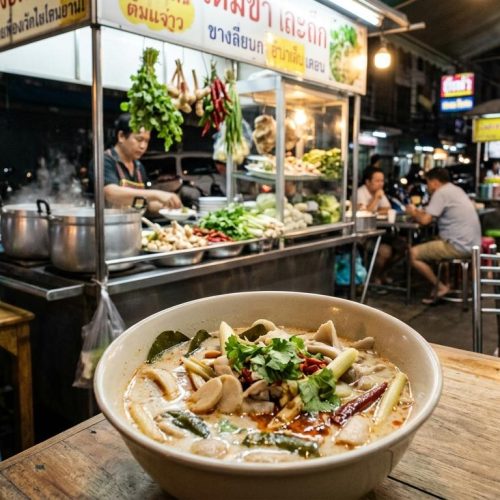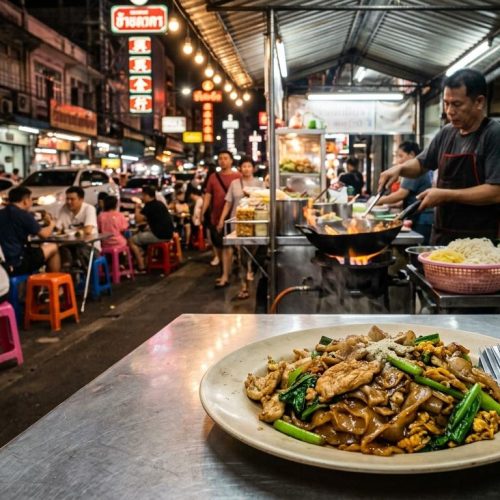
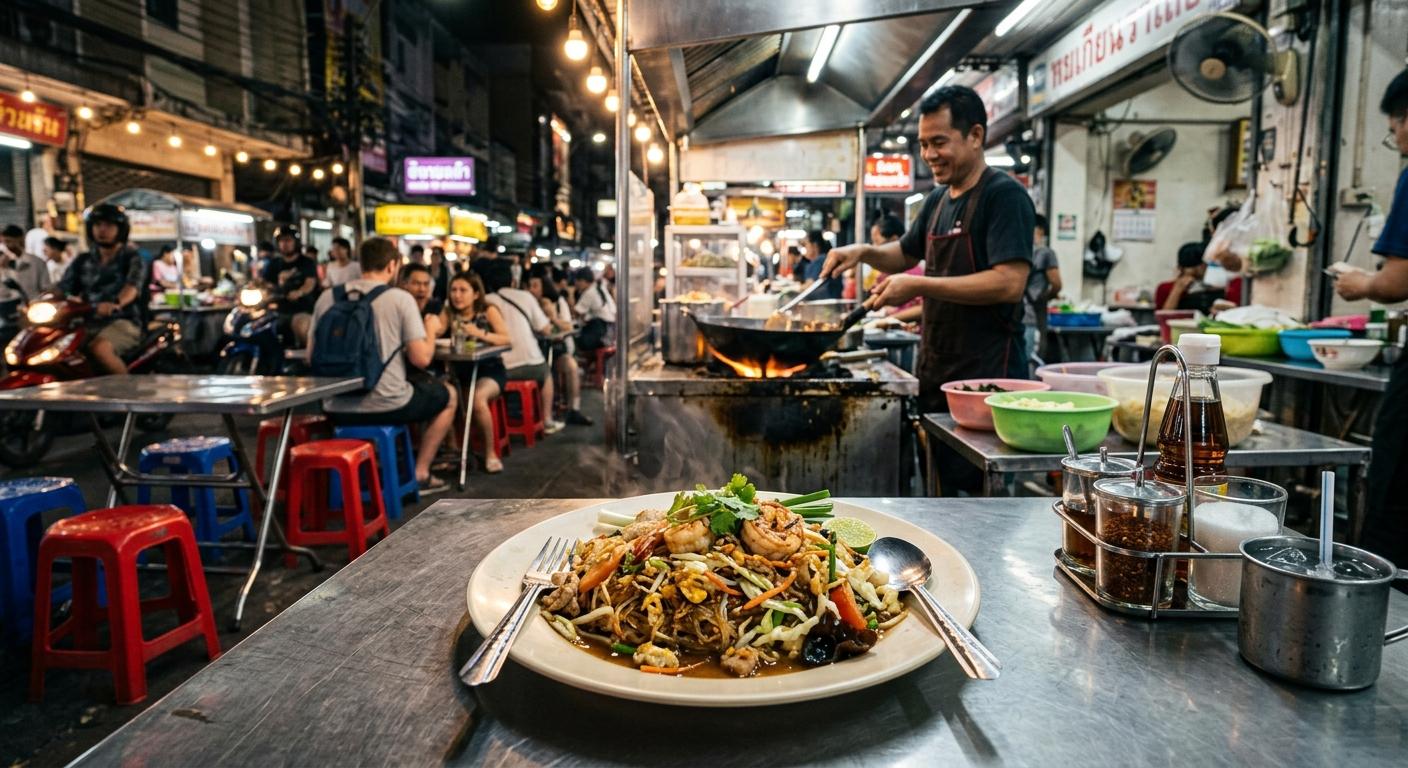
Thailand is famous for its bold flavors – but not every favorite dish has to be fiery or complicated. Pad Woon Sen, stir-fried glass noodles from the wok, is more of a down-to-earth everyday comfort food in Thailand: quick to make, wonderfully aromatic, and just right when you’re craving something savory but not too heavy.
Why Pad Woon Sen is so popular
Pad Woon Sen is a classic Thai noodle dish with delicate glass noodles, vegetables, egg, and tender chicken. Compared to Pad Thai, it’s a bit milder, more balanced, and wonderfully suitable for everyday cooking. That’s exactly why it’s a real insider tip from Thai cuisine for many people. The glass noodles soak up the sauce especially well, while staying pleasantly soft with a light bite – this combination is what makes the dish so beloved.
If you’re looking for an authentic Thai recipe that works at home without special equipment, you’re in the right place. This Pad Woon Sen recipe is ideal for 2 to 4 people, can be easily adapted, and is foolproof even for beginners.
Ingredients for 2–4 servings
- 100 g glass noodles (mung bean or bean-thread noodles)
- 250 g chicken breast or boneless chicken thighs
- 2 eggs
- 2 cloves of garlic
- 1 small onion
- 150 g white cabbage
- 1 small carrot
- 1 tomato
- 2 spring onions
- 2 tbsp neutral oil for frying
- A little fresh cilantro for serving, optional
For the marinade:
- 1 tsp soy sauce
- 1 pinch white or black pepper
For the sauce:
- 2 tbsp oyster sauce
- 1 tbsp soy sauce
- 1 tsp seasoning sauce or additional soy sauce
- 1 tsp sugar
- 1/4 tsp white pepper
- 3–4 tbsp water
Preparation: How to make Pad Woon Sen step by step
First, prepare the glass noodles. Place them in a bowl with room-temperature water and let them soak for about 7 to 10 minutes. They should become soft and flexible, but not mushy. Then drain them and cut them once or twice with kitchen scissors. It sounds trivial, but it makes a huge difference later, because it makes it much easier to toss the noodles in the wok and prevents them from turning into one big clump.
While the noodles are soaking, cut the chicken into thin, bite-sized pieces. Mix it with 1 teaspoon of soy sauce and some pepper. This short marinade seasons the meat before frying and helps it stay juicy.
Next comes the vegetable prep: Slice the onion into thin strips, chop the garlic, cut the cabbage into small pieces, halve the carrot lengthwise and slice it thinly. Cut the tomato into wedges, and the spring onions into pieces about 3 to 4 cm long. It’s important to have everything prepared and ready – once you start cooking in the wok, everything moves quite quickly.
Now mix the sauce. Stir together the oyster sauce, soy sauce, seasoning sauce, sugar, pepper, and water in a small bowl until the sugar has dissolved. The sauce should taste savory, slightly sweet, and well balanced. Don’t worry if it seems quite strong on its own – later it will be spread out over noodles, meat, and vegetables.
Heat a wok or large frying pan over medium-high to high heat. Add 1 tablespoon of oil. Crack in the eggs and let them set briefly. Then roughly scramble them with a spatula so that soft curds form. The eggs don’t need to be cooked until dry – slightly moist is perfect here. Remove them from the pan and set aside.
Add the second tablespoon of oil to the wok. Now add the marinated chicken. Stir-fry until the pieces no longer look raw on the outside. They don’t need to be fully cooked through at this point, as they’ll finish cooking with the noodles later. Then add the garlic and onion. When the onions turn slightly translucent, they’re just right: they should be soft and aromatic but not browned at the edges. If the garlic starts to color too quickly, briefly reduce the heat – burnt garlic becomes bitter very fast.
Next, add the carrot and cabbage to the pan. Stir-fry everything for 1 to 2 minutes. The vegetables should soften slightly but still keep some bite. Then add the tomato wedges. They should just soften a little and release some juice – this juice will later combine beautifully with the sauce.
Now add the drained glass noodles to the wok. Immediately pour the prepared sauce over them and quickly toss everything together with two spatulas or tongs. Glass noodles absorb liquid very quickly, so you need to keep things moving now. If you notice the pan getting too dry, add a tablespoon of water at a time. The right consistency is reached when the noodles look glossy, are evenly seasoned, and don’t stick together in dry clumps.
Now return the eggs to the pan along with the spring onions. Gently fold everything together so the egg stays in nice pieces. Taste a noodle: it should be soft but still slightly elastic. The chicken should now be fully cooked through. If necessary, stir-fry for another 30 to 60 seconds.
To serve, you can plate the Pad Woon Sen straight from the wok and garnish with fresh cilantro if you like. You can also serve lime wedges, chili flakes, or fish sauce at the table – that way everyone can season their own plate to taste.
Tips for authentic flavor
For especially good Pad Woon Sen, it’s worth using glass noodles made from mung bean starch. They stay pleasantly elastic and absorb the sauce beautifully. Also make sure not to soak the noodles for too long – if they’re too soft, they’ll break more easily in the wok. And one more kitchen trick: it’s better to fry briefly over high heat than to cook gently for a long time. This keeps the vegetables fresh and gives the dish that typical Thai wok character.
Conclusion: Thai comfort food for your home
Pad Woon Sen is one of those dishes that seem uncomplicated yet brings a surprising amount of flavor to the table. It’s light, savory, quick to make, and a wonderful alternative to the better-known Thai classics. If you want to cook Thai food without starting straight away with a complex curry or Pad Thai, this recipe is a perfect introduction.
Sources: Pad Woon Sen recipe – Hot Thai Kitchen | Pad Woon Sen – Thai Caliente | Thai noodle dishes – Hot Thai Kitchen