A fragrance like at a Thai market
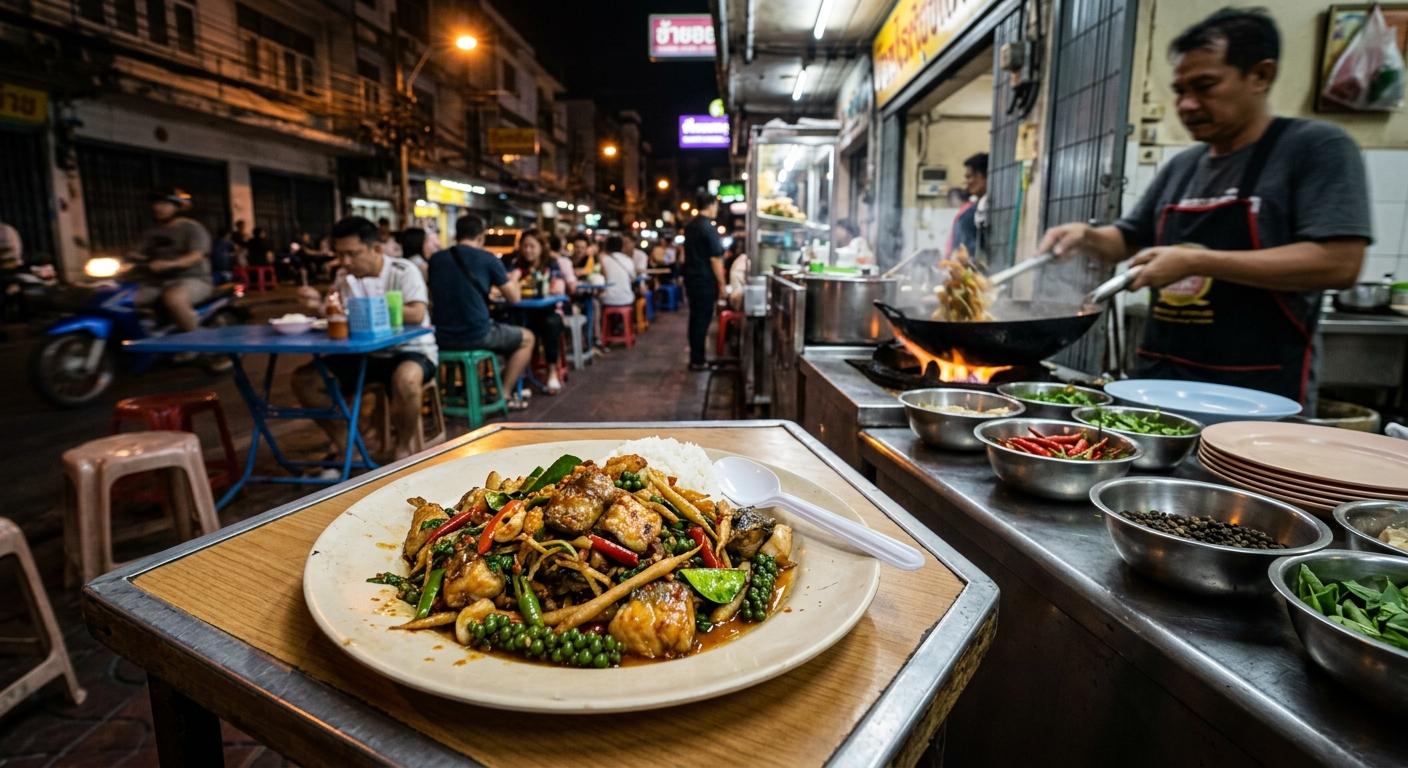
Some dishes manage, from the very first sear, to turn your whole kitchen into a little Bangkok moment – Pad Cha Pla is exactly that kind of dish. This spicy Thai fish stir‑fry lives from high heat, fresh herbs, and that unmistakable aroma that instantly makes you crave the first bite.
Ingredients for 2–4 servings
For this Thai fish dish you’ll need:
– 500 g firm fish fillet, e.g. cod, pollock, halibut, or pike-perch
– 2 tbsp neutral oil for frying
– 3 cloves of garlic
– 2 shallots
– 2–3 red chilies
– 1 piece of ginger or galangal, about 3 cm
– 1 small handful green peppercorns on the stem, optional
– 1 small handful Thai basil
– 1 small handful fresh cilantro
– 1 red bell pepper
– 1 small onion
– 2 tbsp oyster sauce
– 1 tbsp light soy sauce
– 1 tsp fish sauce
– 1 tsp sugar
– 3–4 tbsp water or mild stock
– optional: 1 tsp cornstarch + 1 tbsp water for light thickening
– jasmine rice for serving
– lime wedges for serving
How to make Pad Cha Pla step by step
If you’re cooking Pad Cha Pla for the first time, the most important rule is very simple: prepare everything first, then start frying. This dish comes together very quickly in the wok or pan, so you should have fish, vegetables, herbs, and sauce ready next to the stove.
First, cut the fish into bite‑sized pieces. Pat it dry with paper towels – this is a small but crucial step. Dry fish sears much better and won’t fall apart as easily. If you like, you can lightly moisten it with a little soy sauce, but be very sparing so that the fish’s own flavor remains in focus.
Now prepare the aromatics. Finely chop the garlic, cut the shallots into thin strips, and slice the chilies diagonally into thin rings. Cut the ginger or galangal into fine matchsticks. Cut the bell pepper into thin strips and the onion into fine wedges. Pick the leaves off the Thai basil and have the cilantro ready as well. If you can get fresh green peppercorns, they’ll give the dish a wonderfully intense, typically Thai kind of heat and aroma.
Next, mix the sauce. Combine oyster sauce, light soy sauce, fish sauce, sugar, and water in a small bowl. This way you’ll have everything ready to go later and won’t have to measure frantically while stir‑frying. The sauce should taste bold, salty‑savory, and slightly sweet – not too sweet, just round and balanced.
Now heat a wok or large pan over high heat. Really wait until the oil is hot. You can tell because it becomes thinner and starts to shimmer lightly. Add the fish first and sear it briefly without stirring constantly right away. This way it gets a bit of color on the outside. After about 1–2 minutes, carefully turn the pieces over. The fish doesn’t need to be fully cooked at this point; it will finish cooking later in the sauce. It’s best to remove it from the pan for now so it doesn’t fall apart.
If needed, add a small splash of oil to the wok and then fry garlic, shallots, chili, and ginger. This step only takes a short time – usually 20 to 30 seconds. It’s important that the garlic becomes fragrant but doesn’t turn dark. Once garlic becomes bitter, the dish loses its freshness. Now add bell pepper, onion, and the green peppercorns and stir everything over high heat.
Now return the seared fish to the pan. Pour the sauce over it and gently toss everything together. When you see the sauce gently bubbling on the bottom of the pan and coating the ingredients with a glossy sheen, you’re on the right track. If it seems too thin, you can now stir in the mixed cornstarch. Use only a little, though – Pad Cha Pla is not meant to have a heavy, thick sauce, but rather to be juicy and aromatic.
Let everything simmer for another 1–2 minutes. The fish is perfect when it flakes easily but is still juicy. Right at the end, fold in the Thai basil and cilantro. The herbs should only come into contact with the residual heat for a short moment so they keep their fresh aroma. This exact moment is what makes the dish so special: savory, fragrant, mildly spicy, and full of herbal notes.
Serve Pad Cha Pla immediately with freshly cooked jasmine rice and a few lime wedges. A squeeze of lime at the table adds another burst of freshness and beautifully lifts the bold flavors. If you like it hotter, you can also sprinkle some extra fresh chili on top.
Tips for beginners and real wok aroma
To make sure your Pad Cha Pla really turns out well, here are three simple kitchen tips: First, don’t overcrowd the pan. If too many ingredients go in at once, they’ll steam rather than sear. Second, work with high heat but short cooking time. That’s exactly what creates the characteristic profile of a Thai wok dish. Third, stir the fish gently. A spatula or gentle tossing is better here than vigorous stirring.
If you don’t have a wok, a large non‑stick pan works very well too. What matters more is the cooking order than the perfect equipment. And even if you can’t get all the original herbs, the dish is still worth making – Thai basil, however, makes the biggest difference in terms of flavor.
Why this Thai recipe is perfect for home
Pad Cha Pla is a wonderful recipe for anyone who wants to cook Thai food without spending hours making curry pastes. The dish comes together quickly, is full of flavor, and still feels special. Especially if you love Thai cuisine and are craving something fresh, spicy, and out of the ordinary, this wok fish is a really nice choice for a weeknight dinner or a relaxed weekend meal.
Sources: Authentic recipe and background on Pad Cha Pla at Hot Thai Kitchen | Thai dishes and culinary context at Eating Thai Food