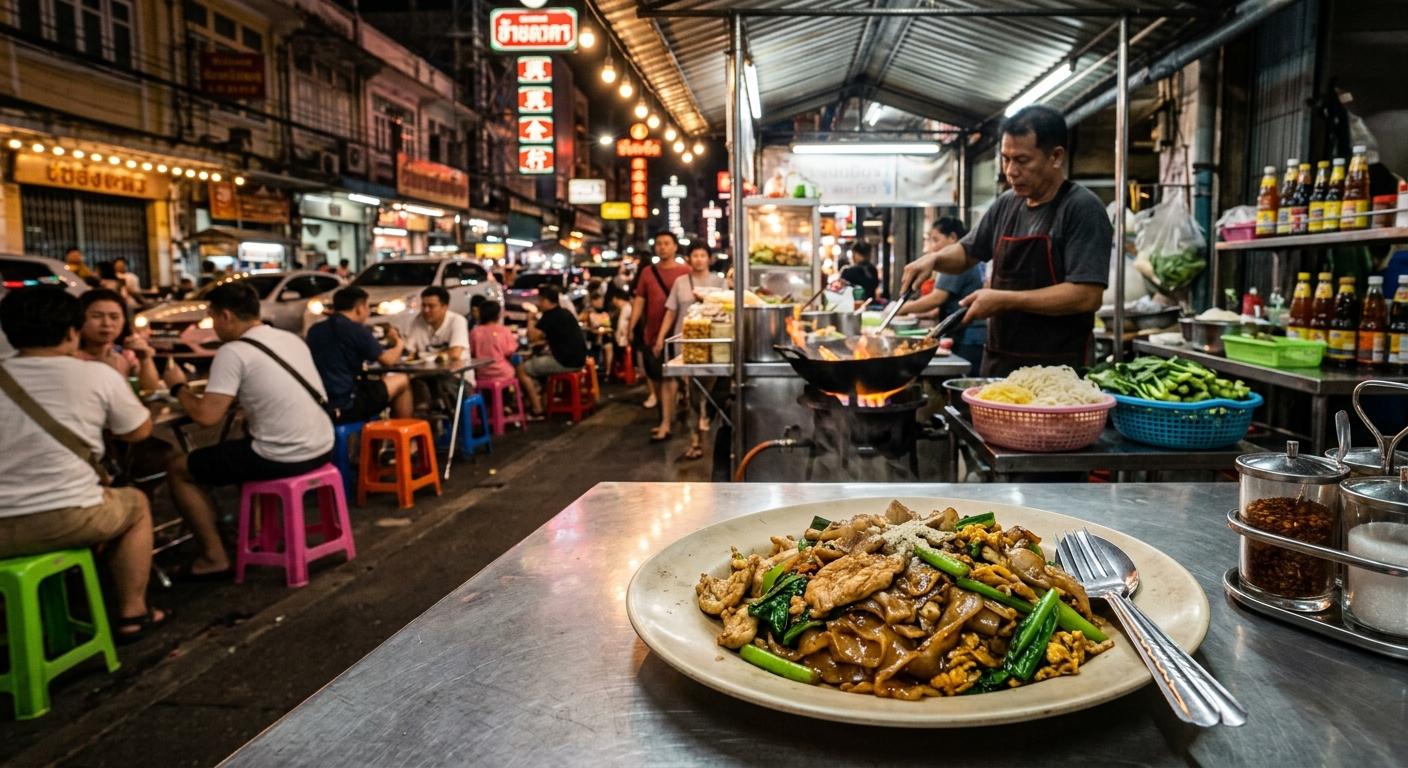
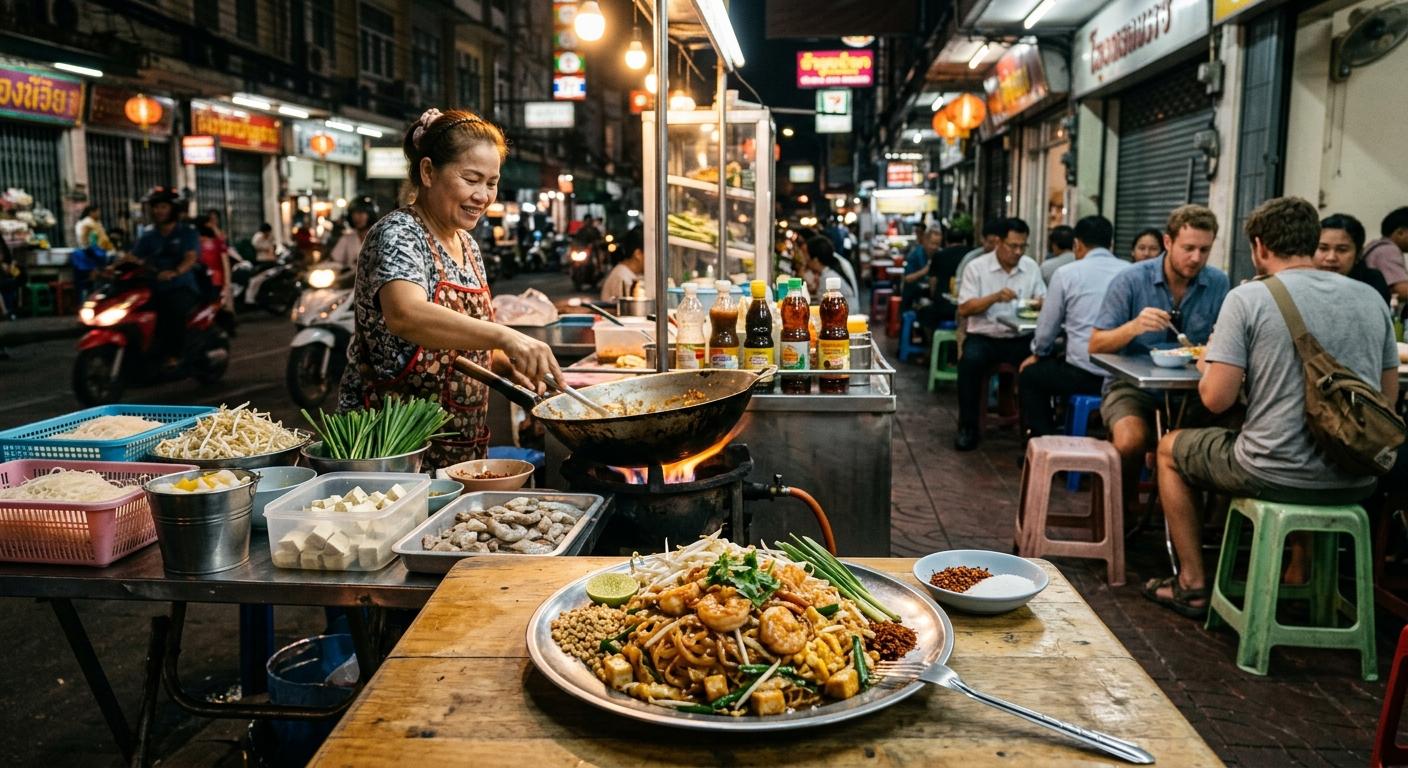
There are dishes that transport you, with the very first smell, straight to a bustling street in Bangkok – Pad Thai is definitely one of them. These famous Thai stir-fried rice noodles combine sweetness, acidity, saltiness, and roasted flavors so harmoniously that just a few ingredients turn into a true favorite dish.
Why Pad Thai Is So Popular
Pad Thai is one of the best-known dishes in Thai cuisine – and for good reason. It’s quick to make, still tastes refined, and lives from that typical balance of flavors for which Thailand is celebrated worldwide. Unlike many very “saucy” noodle dishes, the noodles here should not end up swimming in liquid, but instead nicely absorb the sauce. That’s exactly what makes a good Pad Thai recipe.
Ingredients for 2–4 Servings
For the Pad Thai:
- 200 g flat rice noodles
- 250 g shrimp, peeled and deveined
- 2 eggs
- 100 g firm tofu, cut into small cubes
- 2 cloves garlic, finely chopped
- 2 shallots, finely diced
- 2 tbsp dried small shrimp, roughly chopped (optional but very flavorful)
- 2 tbsp preserved radish, finely chopped (optional)
- 2–3 tbsp vegetable oil
- 150 g mung bean sprouts
- 3 spring onions, cut into pieces
- 1 small handful roasted peanuts, roughly chopped
- Lime wedges for serving
- Chili flakes to taste
For the Pad Thai sauce:
- 3 tbsp tamarind paste
- 2 tbsp fish sauce
- 2 1/2 tbsp palm sugar or brown sugar
- 2–3 tbsp water
Pad Thai Recipe: Step-by-Step Instructions
To make your Pad Thai taste like in Thailand, good preparation is key. Once the wok is hot, everything goes very quickly. So it’s best to have all ingredients prepped and measured out in advance. This is not an exaggerated pro tip – with wok dishes, it truly makes all the difference.
Start with the rice noodles. Place them in a large bowl and cover them with lukewarm water. Let them soak until they’re flexible but still have a slight firm core. They should not become completely soft, as they will continue to cook in the pan later. If they get too soft already in the bowl, they’ll easily fall apart in the wok, which would be a shame.
While the noodles are soaking, prepare the sauce. Mix tamarind paste, fish sauce, sugar, and water in a small bowl. Stir until the sugar is mostly dissolved. The sauce should taste intense – slightly sweet, distinctly savory, and pleasantly sour. This exact combination is what later gives the authentic Pad Thai its typical character.
Now heat a wok or a large pan. The pan should be really hot before you add the oil. Then add some oil and briefly fry the shrimp until they just turn pink and slightly curl. Remove them immediately. This way they stay juicy and won’t dry out later.
If you are using tofu, add a small splash of oil to the wok if needed and fry the cubes until the edges turn lightly golden brown. Then add shallots, garlic, dried shrimp, and the preserved radish if using. Fry everything over medium to high heat. The shallots should become soft without turning dark. “Translucent” here means they look slightly see-through, smell intense, and lose their raw sharpness. As soon as the garlic smells aromatic, you’re right on track.
Push everything a bit to the side of the wok and add the eggs in the middle. Let them set for a few seconds, then roughly scramble them with a spatula so that soft pieces form. It doesn’t have to be a perfect scrambled egg – the irregular pieces are exactly what make the dish especially tasty later.
Now add the well-drained noodles to the wok. Pour the sauce directly over them and mix everything quickly. At first, the noodles often still feel a bit firm and the amount of sauce may seem too little. Don’t worry: with a bit of patience, the rice noodles will gradually absorb the liquid. Keep tossing them so they cook evenly. If the pan looks too dry and the noodles are still too firm, add water tablespoon by tablespoon – really just a little. This way you can control the texture without making the dish watery.
The right moment is reached when the noodles are soft but still slightly elastic and the sauce has been almost completely absorbed. The Pad Thai should look glossy but not be swimming in sauce. Exactly then, add the shrimp, half of the bean sprouts, and the spring onions. Gently fold everything in. The sprouts should get a bit of warmth but keep their fresh crunch – this is an important contrast to the soft noodles.
Take the wok off the heat and serve the dish immediately. Sprinkle the chopped peanuts on top and serve with lime wedges and chili flakes if desired. A squeeze of lime juice right before eating brightens all the flavors and makes the dish wonderfully fresh.
If you want to make Pad Thai at home, one thing helps above all: don’t put too much into the pan at once. Better cook in two smaller batches than overload the wok. This way the ingredients develop roasted flavors instead of just steaming. And these lightly roasted notes are what make the difference between “pretty good” and “wow, this tastes just like in a Thai restaurant”.
This Thai Pad Thai recipe is perfect for a relaxed dinner when you’re craving something aromatic that still doesn’t feel heavy. It’s uncomplicated, full of character, and a wonderful introduction to the world of Thai cuisine.
Sources: Authentic Pad Thai Recipe – Hot Thai Kitchen | Easier Weeknight Pad Thai – Hot Thai Kitchen