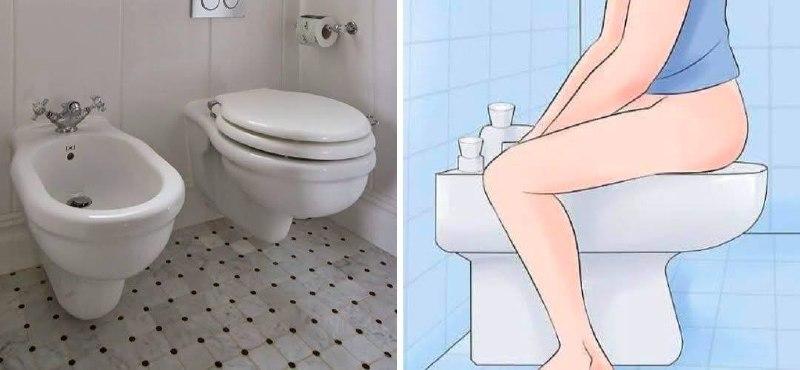
Those who have traveled to France, Italy, Spain, or other European countries may be surprised when they enter the bathroom of a hotel or accommodation. Next to the toilet, there is often another smaller sanitary fixture that appears to look like a toilet, but has neither a normal seat nor a flush tank. Many people wonder why there are two toilets in one room, and some think it is a foot-washing basin or a children’s toilet.
In fact, it is a bidet, which originated in France before modern bathrooms existed. History enthusiasts believe that the bidet was invented in France at the end of the 17th or the beginning of the 18th century. The French term “bidet” means “little horse,” because using it is somewhat similar to riding. At that time, daily bathing was not a habit, especially during the cold winter months, as heating water was time-consuming and expensive. Europeans therefore developed a method for targeted body hygiene.
The bidet was designed to clean the intimate area, the buttocks, and the lower body after using the toilet. Originally, the bidet was considered a luxury item found in palaces and mansions of the French upper class. With the development of plumbing in the 19th century, the bidet became more common, especially in France, Italy, Portugal, and Spain. After the Second World War, it became standard in many Southern European countries. The concept was further developed in Japan as well, and today, smart toilets with automatic water jets are popular worldwide.
The traditional way to use a bidet is by sitting on it, with the user either facing the tap side or turning the other way around, depending on comfort. Unlike Asian handheld bidet sprays, the water flows into the basin and the user manually controls the cleaning process.
Modern developments include automatic bidets combined with toilets, equipped with warm-water nozzles, warm-air dryers, and self-cleaning systems.
Why is the bidet not well known in Thailand? One explanation is that Thailand has inexpensive, more convenient handheld water sprays, and people tend to shower several times a day due to the humid, hot weather conditions. However, in Western countries, cleaning with water is increasingly recognized, supported by studies on hygienic effectiveness.
For Thais who have ever wondered why European bathrooms seem to have two toilets: now you know that one is for use and the other is for cleaning.